
Criminal Court Records in St. Clair County
A criminal court record opens the moment a case is filed against a defendant. It is the official case file, and it grows with every hearing, filing, and ruling. In St. Clair County, felony case records are held by the County Clerk, who retains all 31st Circuit Court files at the courthouse in Port Huron. The clerk's records counter sits in Room 1100. Misdemeanor and ordinance case records stay with the 72nd District Court, which keeps its own criminal files. Each record ties to a case number, and the circuit format appears as 99-000000-XX.
Two trial courts handle criminal cases here. The 72nd District Court is the county's lower court. It hears misdemeanors, ordinance violations, and the early stages of every felony. The 31st Circuit Court is the higher trial court. It takes felonies once they bind over from the district court, along with probation violations and any sentence that could send a person to prison. A felony therefore leaves a trail in both courts. The complaint, warrant, arraignment, and preliminary examination are district events, while the information, trial, and sentence land in the circuit file.
Searching St. Clair County Criminal Court Records
The starting point depends on the court. For felony and circuit matters, the St. Clair County Web Inquiry system carries 31st Circuit Court case records and schedules. For misdemeanor, ordinance, and traffic-linked matters, the statewide MiCOURT Case Search reaches 72nd District Court records where the court takes part. Both let a searcher look up a defendant by name or by case number.
- Open the county Court Schedules and Records page, then pick the circuit web inquiry or the district MiCOURT link.
- Search by defendant name, or enter the case number if it is known.
- Narrow the results by court, case type, and the year the case opened.
- Open the matching case to read the docket, charges, and disposition.
- Order a certified copy from the County Clerk when the online entry is not enough.
State tools round out a name search. The Michigan State Police run ICHAT, a public criminal history service that reports convictions from courts across the state. It is a history check, not a warrant list, and suppressed records do not appear. A clerk copy still gives the fullest picture of a single case, since ICHAT summarizes statewide convictions rather than the day-to-day docket.
The Michigan State Police publish their public criminal history tool on the state criminal history record page, which sets what a name-based check will and will not return.
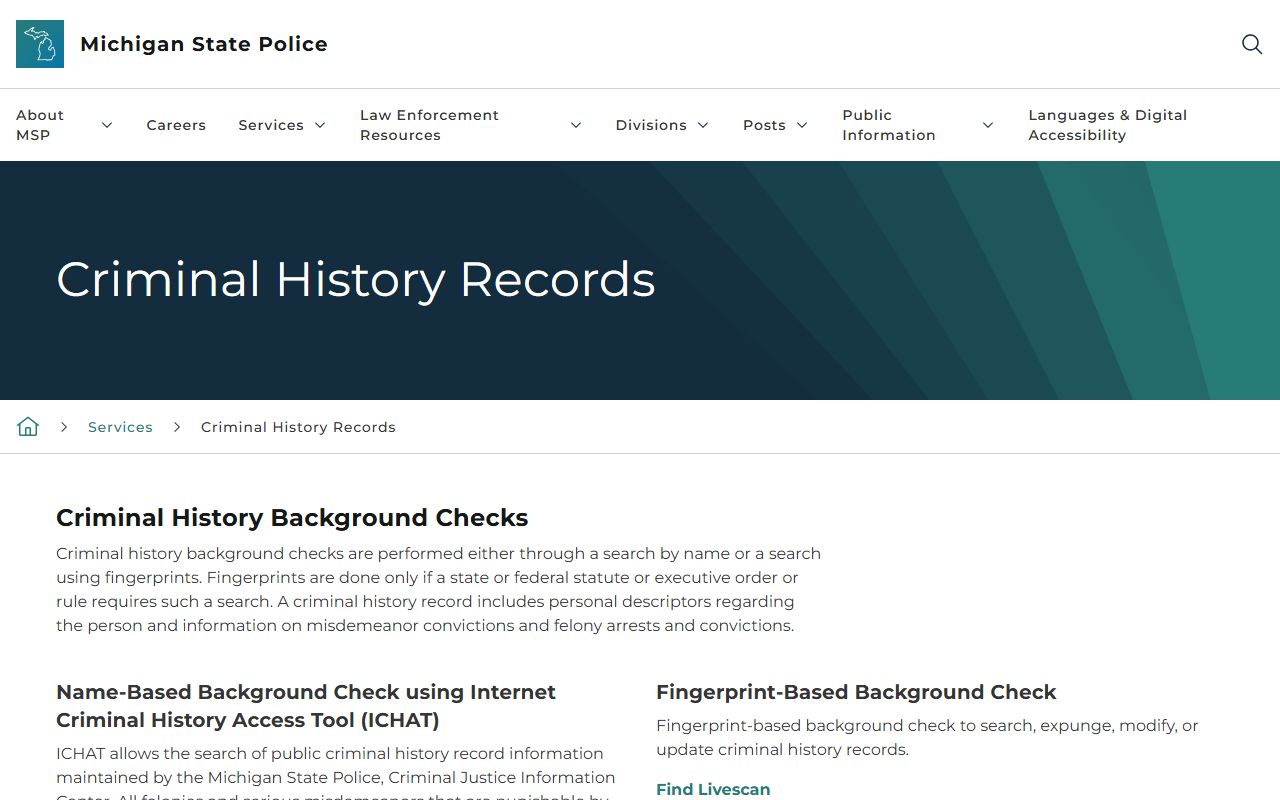
That statewide summary complements, but does not replace, the St. Clair County criminal court records held by the clerk and the district court.
How St. Clair County Criminal Cases Move
A criminal case moves through fixed stages, and each one adds pages to the record. A felony begins with a complaint and warrant, then an arraignment in the district court. A preliminary examination follows, where a judge decides whether enough evidence exists to bind the case over to the circuit court. Misdemeanors skip the bindover and stay in the district court through sentencing. Watching the stages helps a reader place any single docket entry in context.
Case flow: Charges Filed › Arraignment › Preliminary Exam / Bindover › Pretrial › Plea or Trial › Disposition › Sentencing
| Stage | What Happens |
|---|---|
| Charges Filed | The prosecutor files a complaint and warrant naming the offense, which opens the case. |
| Arraignment | The defendant hears the charges, learns their rights, and the judge sets bond and a plea. |
| Preliminary Exam / Bindover | A district judge checks for probable cause and binds a felony over to the 31st Circuit Court. |
| Pretrial / Motions | Attorneys exchange evidence, argue motions, and often discuss a plea agreement. |
| Plea or Trial | The defendant enters a plea, or a judge or jury decides guilt after trial. |
| Sentencing | After a conviction, the court orders jail, prison, probation, fines, costs, or restitution. |
What St. Clair County Criminal Records Show
Once a case file opens, it collects a standard set of fields. Some describe the person and the accusation. Others track money, hearings, and the final outcome. A St. Clair County criminal court record generally shows the fields below, though redactions can hide protected details on the public copy.
| Field | What It Shows |
|---|---|
| Case Number | The circuit format reads 99-000000-XX and ties every filing to one case. |
| Defendant | The accused person, listed against the People of the State of Michigan. |
| Charges | Each offense as filed, with its statute and whether it is a felony or misdemeanor. |
| Bond | Money or conditions set for release and future court appearance. |
| Plea | The defendant's response, such as guilty, not guilty, or no contest. |
| Disposition | How each charge ended, from dismissal to conviction after plea or trial. |
| Sentence | Jail, prison, probation, fines, or costs ordered after a conviction. |
| Restitution and Costs | Victim restitution and court costs, allocated under MCL 780.766a. |
Note: Juvenile identifiers, social security numbers, and similar data are redacted from the public copy of a criminal court record.
Charges vs. Convictions
A charge is not a conviction. Prosecutors file charges on probable cause, and many charges never end in a guilty finding. A criminal court record can show charges that were dropped, dismissed, reduced, or that ended in acquittal. Reading only the charge line can mislead. The disposition line is what tells the real outcome. For a closer look at how offenses are filed and coded, the county's arrest and charge records explain the front end of a case.
| Charge | Conviction | |
|---|---|---|
| Stage | Accusation | Verdict or plea |
| Burden of Proof | Probable cause | Beyond reasonable doubt |
| Public Record | Yes | Yes |
Reading Dispositions and Sentences
Disposition codes summarize the end of each charge. Common entries include guilty, not guilty, dismissed, nolo contendere, and deferred. A deferred or diverted entry may hold judgment while a defendant completes conditions. The sentence follows a conviction and can mix jail, prison, probation, fines, costs, and restitution. A prison sentence moves custody to the state, not the county jail.
Michigan tracks people sentenced to state prison through the MDOC offender tracking system, which shows custody, parole, and probation status.
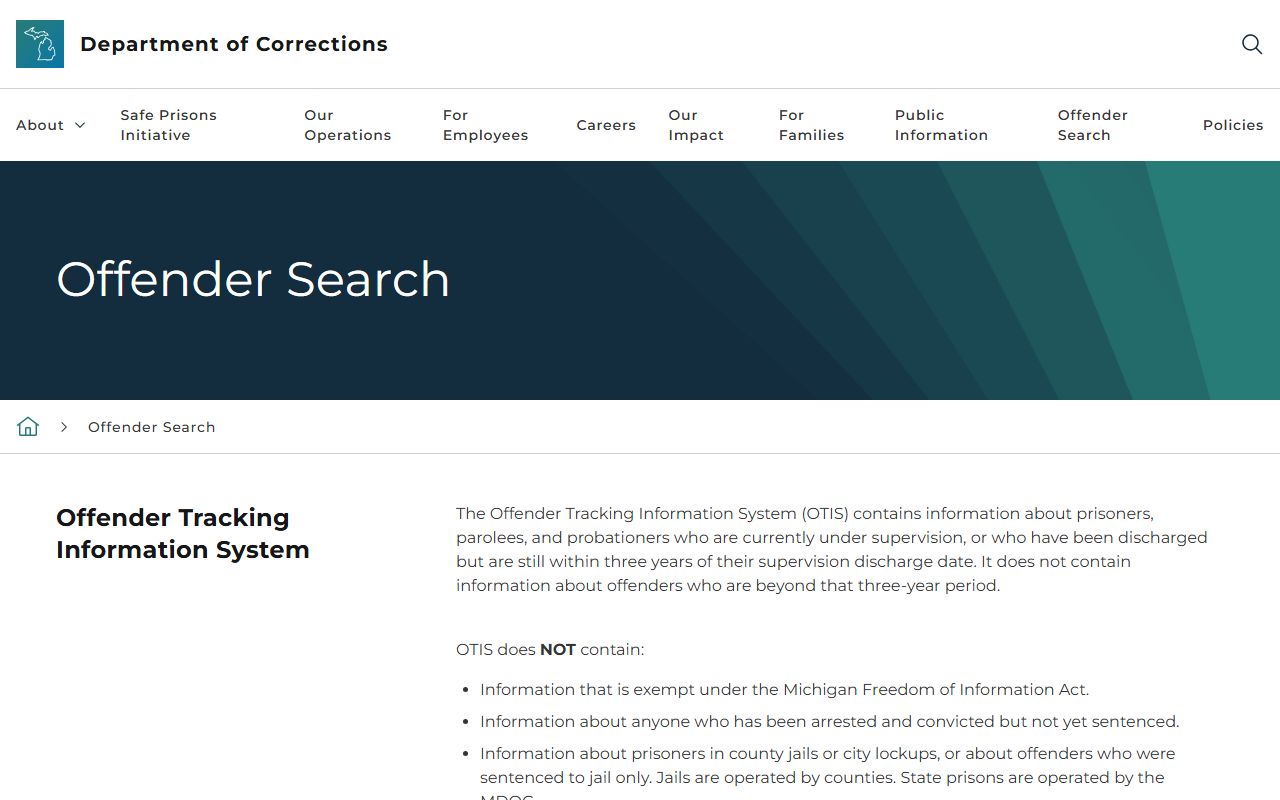
OTIS confirms a state sentence, yet the St. Clair County criminal court record remains the source for the charges, plea, and sentencing terms behind it.
Prosecutor and Public Defender Roles
Two offices sit on opposite sides of a criminal case. The St. Clair County Prosecuting Attorney files and pursues charges from Room 3300 in the courthouse, reachable at (810) 985-2400. The office runs victim, witness, and drug task force units, and it takes part in specialty-court placement. Defendants who cannot afford a lawyer may qualify for the St. Clair County Public Defender, at 302 Michigan Street in Port Huron and reachable at (810) 985-2333. Both roles show up in the record through appearances, motions, and plea negotiations.
Federal crimes charged in this region run through the U.S. Attorney's Office for the Eastern District of Michigan, a separate track from county prosecution.
A federal case does not appear in the St. Clair County criminal court records, since state and federal dockets stay apart.
Diversion in St. Clair County Criminal Cases
Not every case ends in a standard sentence. St. Clair County runs two problem-solving courts that divert eligible defendants toward treatment. The Mental Health Court serves people with severe mental illness or developmental disability who face criminal charges. It can last up to two years, and successful completion resolves the case. The Recovery Court, tied to the 72nd District Court, works with misdemeanor driving offenders who struggle with severe alcohol abuse. A participant pleads guilty, follows a phased plan, and stays at least thirteen months. These entries appear in the criminal court record like any other case event.
Note: A diversion case still shows a guilty plea in the record until the defendant completes the program and the court resolves the charge.
Sealing St. Clair County Criminal Records
Michigan lets people clear many convictions through a set-aside, sometimes called expungement. A sealed record is hidden from ordinary public view but still exists for limited uses. A set-aside goes further and removes the conviction from public criminal history. Eligibility turns on the offense, the number of convictions, and later criminal history, so no outcome is guaranteed. A misdemeanor set-aside is filed in the 72nd District Court, while a qualifying felony set-aside is filed in the 31st Circuit Court, the same court that entered the conviction.
| Sealed | Expunged / Set Aside | |
|---|---|---|
| Visibility | Hidden from public | Removed from public criminal history |
| Law Enforcement | Limited access | Limited, authorized uses only |
| Eligibility | By statute or court order under MCR 8.119 | Qualifying convictions under MCL 780.621 |
Note: A granted set-aside clears a conviction from public criminal history, though courts and law enforcement keep limited access for authorized purposes.
Accessing St. Clair County Criminal Records
Criminal court files in Michigan are open to the public unless a statute, court rule, or judge's order restricts them. Public inspection at the courthouse is the baseline, and the County Clerk fills copy requests for circuit files. District criminal records come from the 72nd District Court office instead. Broader questions about every court level are covered under the county's general court records guidance.
Key Statutes:
Michigan Court Rules 8.119 - governs court records and public inspection in Michigan trial courts unless a court order restricts access.
Michigan Compiled Laws § 15.235 - sets the response deadline a public body must meet after a written records request.
St. Clair County Criminal Background Checks
A criminal court lookup is not the same as a formal background check. Employers and landlords who make decisions must use a screening firm that follows the Fair Credit Reporting Act. A casual search of criminal court records, or an ICHAT report, gives useful history but is not an FCRA-compliant report. Federal convictions add another layer, since people sentenced in federal court are held by the Bureau of Prisons, not the county or the state.
People sentenced in federal court can be located through the Federal Bureau of Prisons inmate locator, which is separate from county and state systems.
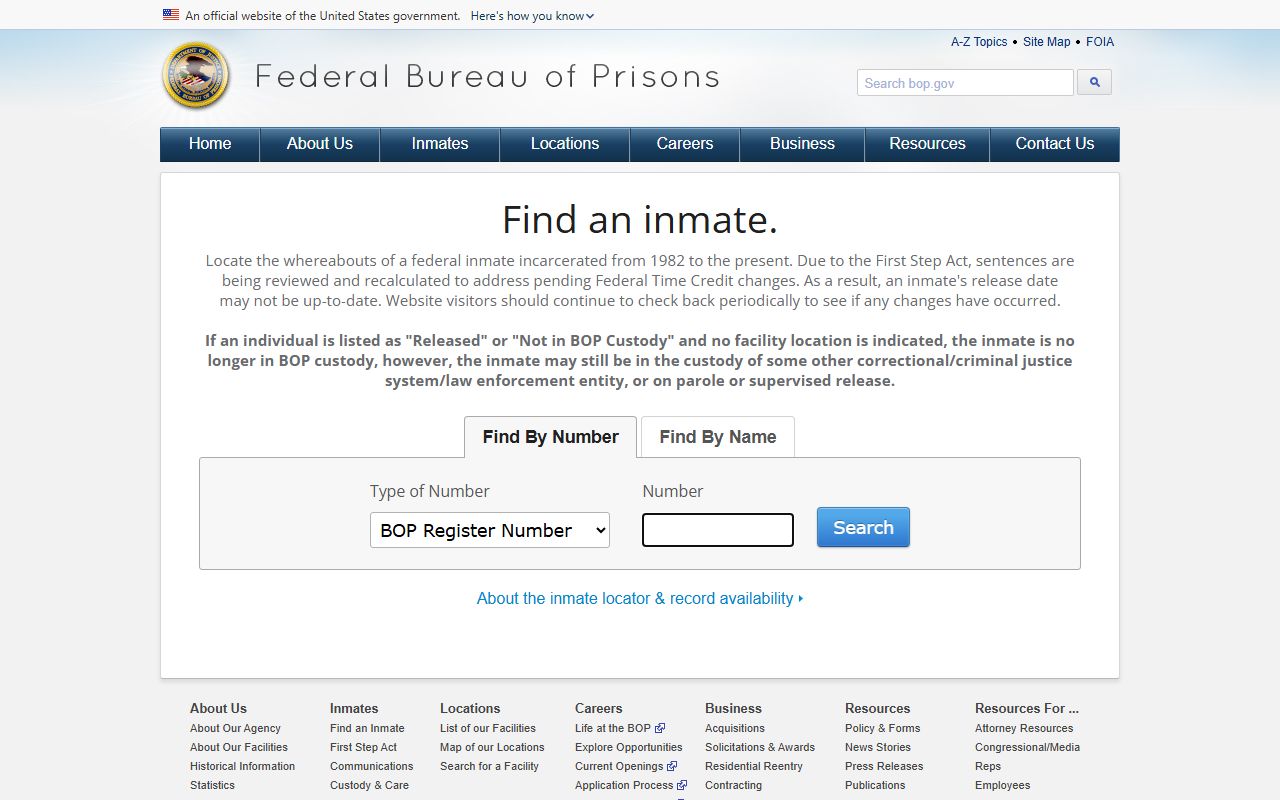
That federal roster sits apart from St. Clair County criminal court records, which cover state charges filed in the local courts.
Important: This site is not a consumer reporting agency under the FCRA, and its records may not be used for employment, tenant, credit, or insurance screening.
Restricted St. Clair County Criminal Records
Some criminal court records stay out of public reach. Juvenile cases run through the Family Division and are shielded from ordinary access. Sealed and set-aside cases drop off the public portal. Ongoing investigations, sensitive warrant material, and files under a court order may also be withheld. A missing online entry does not always mean a case never existed. Calling the County Clerk or the district court office is the reliable next step for older or non-digitized files.