
St. Clair County Arrest Records and Court Charges
An arrest record marks the point when police take a person into custody. It captures the arrest event itself. The record notes the arresting agency, the date, the booking, and the offense the officer alleges. In St. Clair County, that custody event is logged by the arresting agency and the county jail. An arrest record is not a finding of guilt. It shows only that an arrest happened. The court charges after arrest are a different matter. A prosecutor, not the arresting officer, decides the formal charges a court will hear.
Two records track two stages. The booking side lives with the sheriff and the jail. The St. Clair County inmate roster and booking detail show who is in custody right now, and that data sits on the county inmate records page. The court charge record is what the prosecutor files and the court then tracks as the case moves. It lists each charge, its statute, and its current status. The full case file, with pleas, hearings, and the final outcome, appears in the county criminal court records. Arrest records and court charges connect, yet different offices keep them.
How Charges Get Filed After an Arrest
The charge record begins after the arrest. Booking creates the arrest entry. A St. Clair County prosecutor then reviews the police report and decides what to charge. Michigan uses three main charging documents. Each one is a formal accusation. Each one opens a criminal case in court. Which one applies depends on the offense and on how the case starts.
| Complaint / Warrant | Information | Indictment | |
|---|---|---|---|
| What It Is | A sworn accusation that starts a case | The formal felony charge after bindover | A charge voted by a grand jury |
| Filed By | Officer or prosecutor | Prosecutor | Grand jury |
| When Used | Misdemeanors and the start of felonies | Most felonies in Circuit Court | Serious felonies and grand-jury cases |
Most felony cases begin in the 72nd District Court with a complaint and warrant. The district judge holds a preliminary examination. If the judge finds probable cause, the case is bound over to the 31st Circuit Court. At that point the prosecutor files an information, the formal felony charge the Circuit Court will try. An indictment is the grand jury route and is far less common at the county level. Misdemeanor and ordinance charges usually stay in the district court on the complaint alone.
Charge Codes and Severity Levels
Every charge points to a specific law. The charging document lists the statute number, the offense name, and the level. Michigan sorts crimes into felonies, misdemeanors, and local ordinance violations. A felony carries the risk of prison. A misdemeanor carries jail or fines. An ordinance violation is a local rule broken within a city or township.
One arrest can produce several charges. Officers may allege more than one offense from a single incident. Each charge gets its own code and its own status. Felony charges move to the 31st Circuit Court after bindover. Misdemeanor and ordinance charges are handled in the 72nd District Court, the county's high-volume trial court. The code and level decide which court hears the charge and what penalty the law allows.
A single charge entry in the case record packs several fields. Reading them in order tells you what the person faces and where the count stands.
- Case number, shown in the circuit format 99-000000-XX
- Charge description and the statute code behind it
- Charge level: felony, misdemeanor, or ordinance violation
- Filing date and the arraignment date
- Current charge status, such as pending, amended, or dismissed
- Bond amount or the release conditions set by the judge
Charge Status in St. Clair County Court Records
Charges rarely stay frozen in a St. Clair County case. As a case moves, the prosecutor can change what a defendant faces. A charge can be amended, reduced, or dropped. A plea deal often trims counts. A weak count may be dismissed. The docket records each change with a status term, and reading that term tells you where a charge stands today.
| Status | What It Means |
|---|---|
| Amended | The prosecutor changed the charge, its count, or its wording. |
| Reduced | A higher charge was lowered, often a felony down to a misdemeanor. |
| Dismissed | The court dropped the charge, by motion or as part of a plea. |
| Nolle Prosequi | The prosecutor formally declined to pursue the charge. |
| Bound Over | A felony passed from the District Court up to the Circuit Court. |
Note: A dismissed or reduced charge still appears in the court record, showing the history of the case rather than erasing it.
Who Files Charges in St. Clair County
Charges do not come from the police. In St. Clair County, the elected Prosecuting Attorney decides what to file. The office sits in Room 3300 of the county building and answers at (810) 985-2400. Prosecutors review the arrest, weigh the evidence, and choose the charges the county will pursue. They can also add, amend, or drop charges as the case develops.
The office runs several specialized units. The Prosecuting Attorney Special Units page describes a Victim's Rights Unit, a Witness Unit, a Criminal Sexual Conduct Unit, and a dedicated Drug Task Force prosecutor. A Neighborhood Enforcement Team joins the Sheriff, the Port Huron Police, and the Prosecutor on major violent crime. On the defense side, the St. Clair County Public Defender represents eligible defendants who cannot afford a lawyer. The prosecutor files charges, and the defense answers them.
How to Find St. Clair County Arrest Records
Arrest records and charges spread across county and state systems. The booking side sits with the sheriff. The charge side sits with the court that holds the case. Start with the court, then check the jail roster for current custody.
- Open the county Court Schedules and Records page and pick the right court level first.
- For felony charges, use the 31st Circuit Court web inquiry and search by party name or case number.
- For misdemeanor and ordinance charges, use MiCOURT Case Search for the 72nd District Court.
- Open the case and read the charge list, then check each charge's code, level, and current status.
Circuit case numbers follow the format 99-000000-XX. For the booking record and current custody, use the sheriff's inmate lookup, which searches by name or booking number. The roster refreshes through the day and comes with no warranty of accuracy, so call jail information for details not shown online.
Online search is not the only channel. When the record is old, sealed for review, or missing images, the file must be requested from the office that keeps it. Circuit charge documents come from the County Clerk in Room 1100, and the emailed copy costs $15 plus a $5 processing fee, with a certified copy adding $10. District charge records route through the 72nd District Court office. Arrest and booking paperwork held by law enforcement goes through the Sheriff's Service Bureau under a written FOIA request, which may take up to five business days and can be limited for active investigations.
Charges vs. Convictions
A charge is an accusation. A conviction is a result. The difference matters when reading any St. Clair County arrest or charge record. A person can be charged and never convicted. Charges can be dropped, dismissed, or end in acquittal. Both charges and convictions are public court records, yet they carry very different weight.
| Charge | Conviction | |
|---|---|---|
| Stage | Accusation | Verdict or plea |
| Burden of Proof | Probable cause | Beyond a reasonable doubt |
| Decided By | Prosecutor | Court or jury |
| Public Record | Yes | Yes |
| Proves Guilt | No | Yes |
Statewide Charge and Criminal History Lookups
St. Clair County charges also roll up into a statewide criminal history. The Michigan State Police keeps that record. Its ICHAT tool offers a public, name-based criminal history search. By law, all felonies and serious misdemeanors punishable by more than 93 days must be reported to the state. ICHAT does not show warrants or suppressed records. It is a history tool, not a live case docket.
The same agency publishes the sex offender registry through the Michigan State Police sex offender registration page.
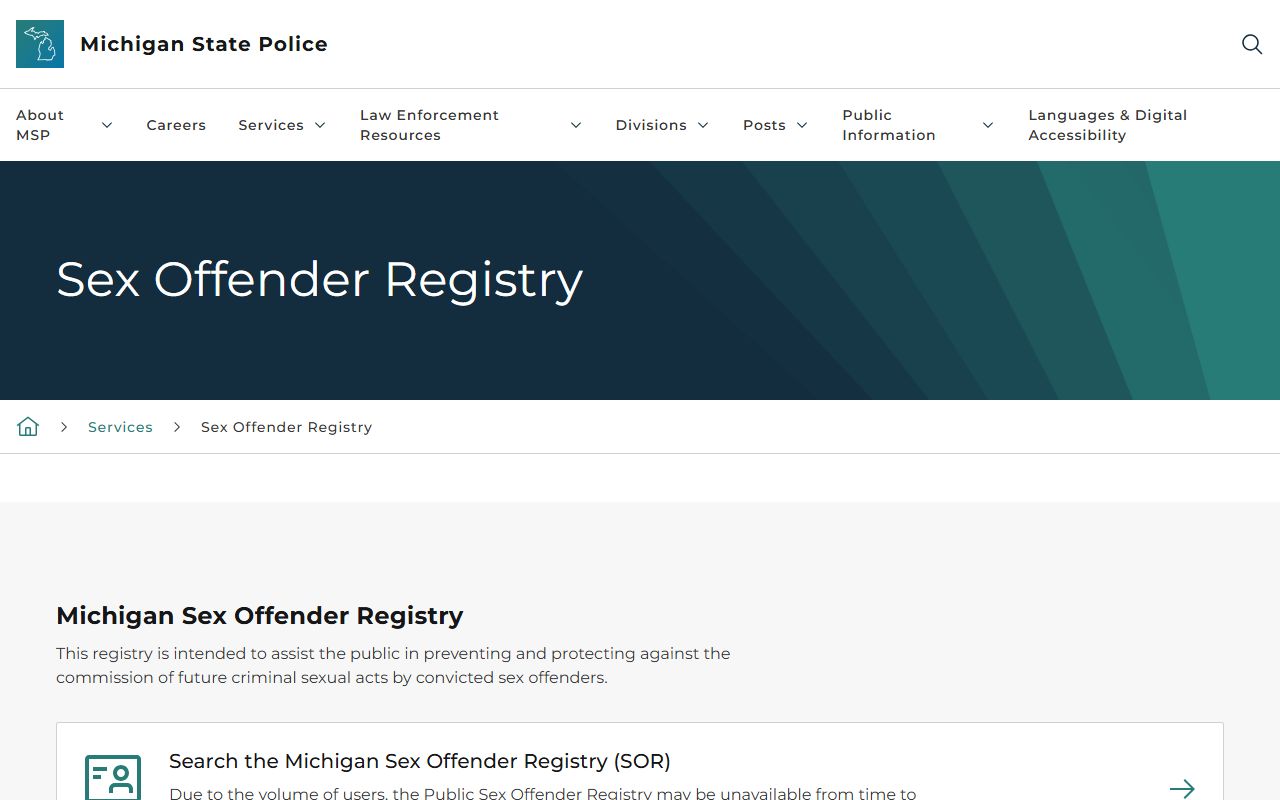
The registry is a separate public record from the court charge file, and it applies only to offenders required to register.
The public-facing search runs on its own site. The Michigan Public Sex Offender Registry lets anyone look up registered offenders under MCL 28.721 and following. It lists offender profiles, not full court case files.
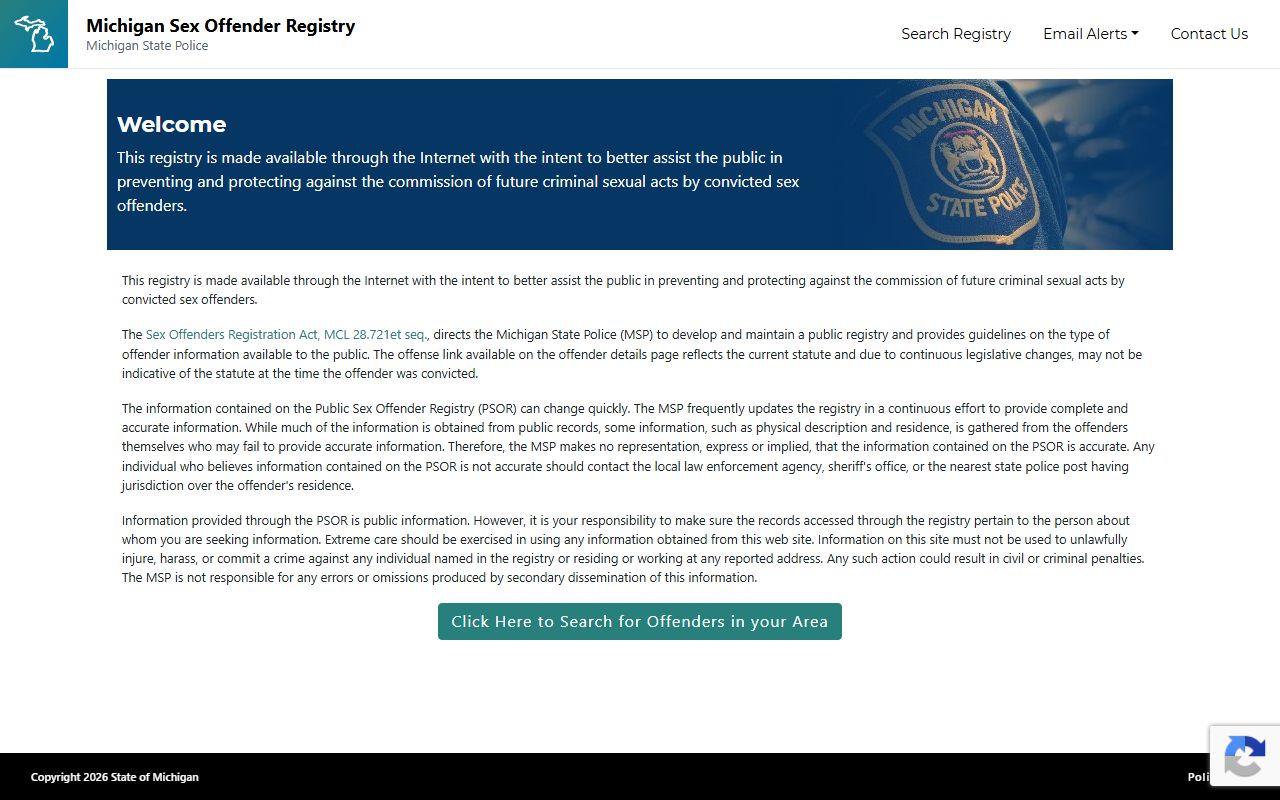
A registry hit confirms status under the Sex Offenders Registration Act, but the underlying charges and convictions still live in the court record.
Note: ICHAT reports statewide criminal history for a fee, yet it will not confirm an open warrant or a suppressed juvenile record.
Federal Charges Near St. Clair County
Some charges are federal, not county. Federal crimes are prosecuted in the U.S. District Court for the Eastern District of Michigan, which holds court in Port Huron among other cities. Those charges never appear in the St. Clair County court portal. Federal case and docket information comes through PACER instead.
The PACER court lookup for the Eastern District of Michigan lists the divisional offices, including Port Huron.
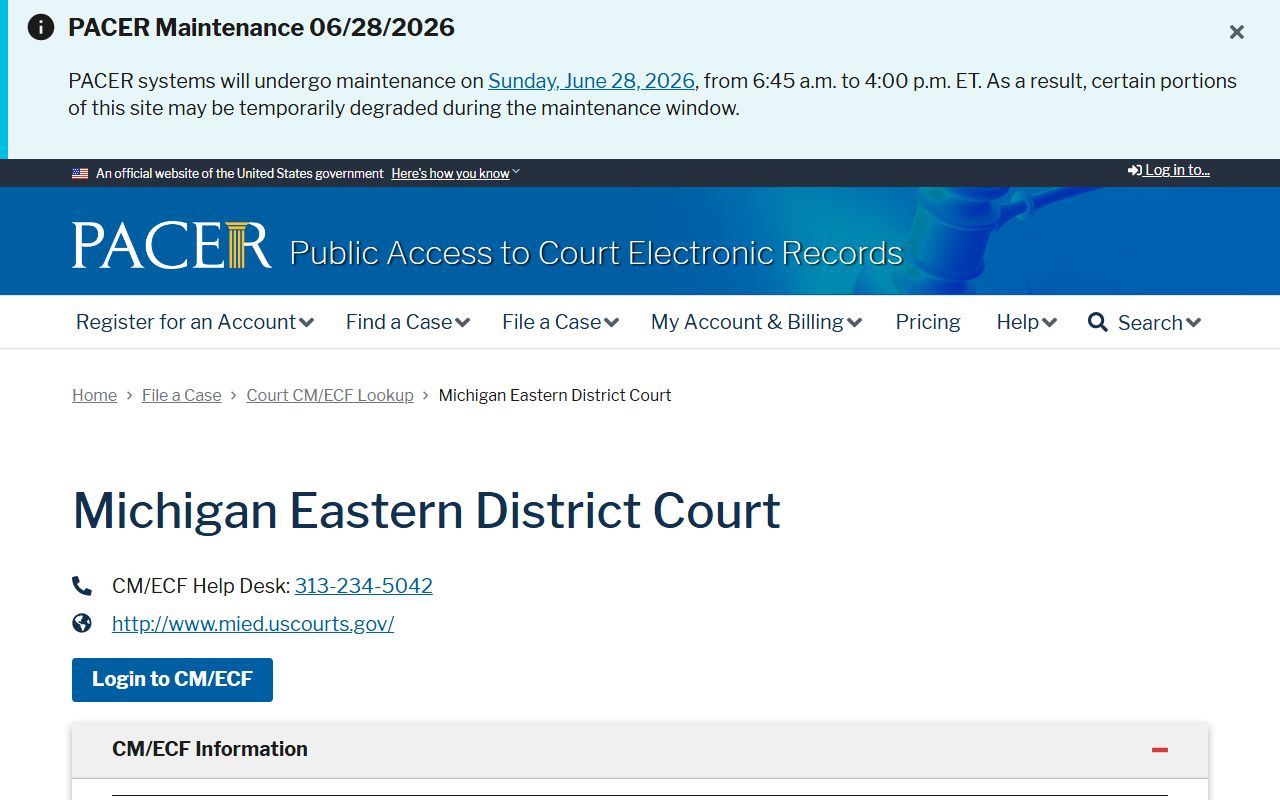
PACER is the electronic access system for federal charges, and it stands apart from any St. Clair County arrest record.
Bankruptcy is federal too, though it is not a criminal charge. The U.S. Bankruptcy Court for the Eastern District of Michigan uses the same PACER system for its dockets.
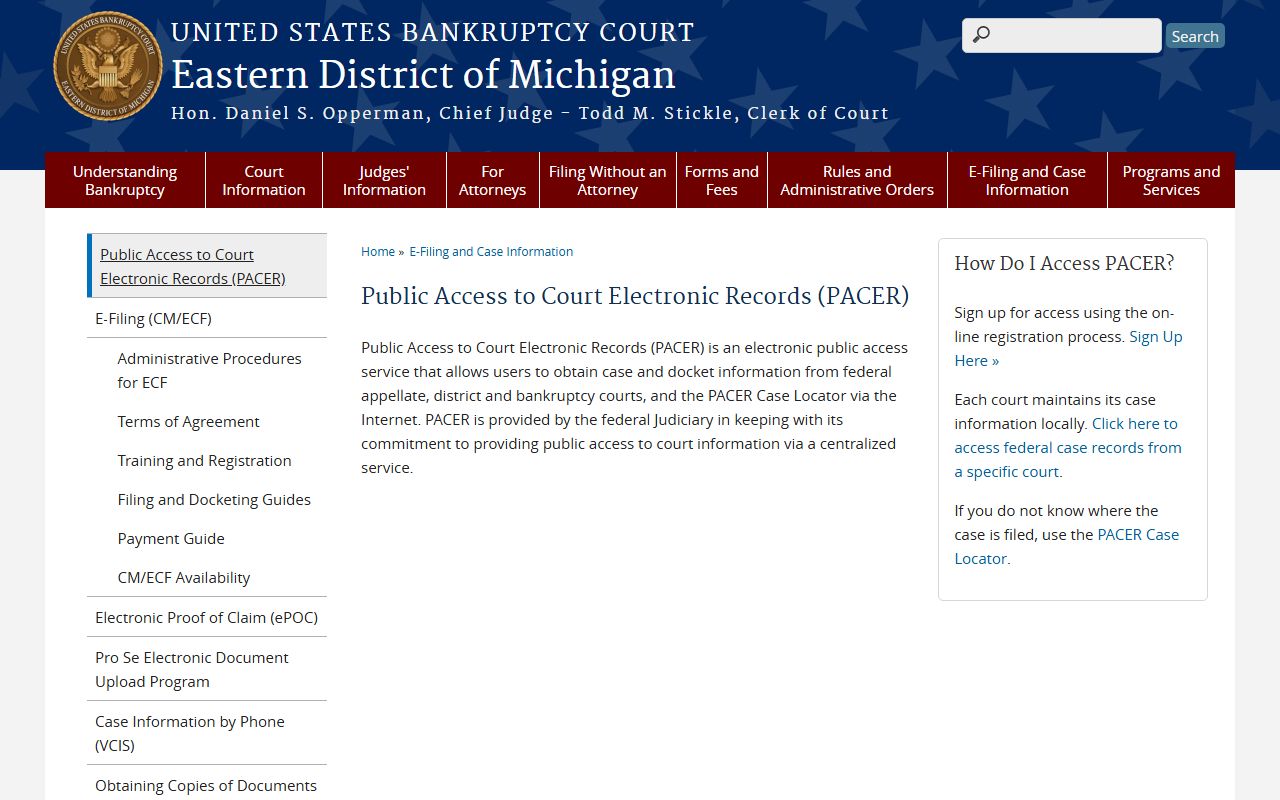
Federal charges, appeals, and bankruptcy filings sit outside the county system, so a full background review may cross both.
Restricted Charge Records in St. Clair County
Not every charge is open to the public. Juvenile charges are handled in the Family Division and are not treated like adult files. Access may be limited to parties, attorneys, and agencies. Sealed records and some dismissed counts can be withheld from ordinary search. Ongoing investigations are not public.
Michigan also lets some convictions be set aside. Under MCL 780.621 and following, a qualifying conviction can be removed from public criminal history. The filing goes to the court where the conviction happened, so a St. Clair County misdemeanor routes to the 72nd District Court and a felony to the 31st Circuit Court. After a set-aside, the record leaves ordinary public access, though limited law-enforcement access can remain.
Important: This site is not a consumer reporting agency under the Fair Credit Reporting Act, and arrest or charge data here may not be used for employment, tenant, credit, or other FCRA-regulated decisions.